Deciding to undergo hair transplantation is a significant, transformative choice. While technology, clinical amenities, and pricing play a role in your decision, no single factor impacts your final result more than the surgeon you choose.
Hair restoration is a specialized discipline blending dermatological science, microsurgical dexterity, and fine visual artistry. Choosing the right medical specialist guarantees surgical safety, high graft survival, and a natural hairline that complements your face for a lifetime.
1. Formal Medical Qualification and Surgical Specialization
The medical credentials of your operating doctor are the first and most vital checkpoint. Hair transplantation should be performed exclusively by qualified dermatologists or plastic surgeons who specialize in hair restoration.
Key Medical Degrees to Verify:
-
Postgraduate Medical Qualification: M.D. or D.N.B. in Dermatology & Venereology from a recognized medical university.
-
Formal Dermato-Surgery Fellowships: Advanced training from premier institutions demonstrating specialized surgical expertise beyond general dermatology.
-
International Society Accreditation: Active memberships in internationally recognized bodies such as the International Society of Hair Restoration Surgery (ISHRS – USA) or the Association of Hair Restoration Surgeons (AHRS, India).
Avoid centers where procedures are directed by general practitioners or non-medical technicians without formal dermatological qualifications.
2. Total Procedural Experience and Track Record
In microsurgery, experience correlates directly with precision, efficiency, and consistent outcomes. Harvesting delicate 0.8mm hair follicles without causing root damage requires years of refined tactile feedback and muscle memory.
[Academic Pedigree] ➔ [10+ Years Dedicated Experience] ➔ [10,000+ Successful Procedures] ➔ [Proven High Graft Yield]
When evaluating a surgeon’s track record, look for:
-
Years in Dedicated Practice: A minimum of 10 to 15 years specializing in hair restoration.
-
Total Procedural Volume: Thousands of documented, successful hair transplant surgeries.
-
Consistent Graft Survival: Proven techniques that maintain high follicle viability and low transection rates.
3. Academic Recognition and Contributions to the Field
Surgeons who contribute to international academic research, present at global conferences, and train other doctors represent the gold standard of clinical excellence.
A prime example of academic leadership in hair restoration is Dr. Gaurav Garg, founder and director of Dermalife Hair and Skin Clinic in Delhi. Dr. Garg completed his foundational medical training with an M.B.B.S. and M.D. in Dermatology & Venereology from the prestigious Seth G.S. Medical College and KEM Hospital in Mumbai.
His commitment to surgical excellence led him to complete a Fellowship in Dermato-Surgery at P.G.I. Chandigarh, a Fellowship in Hair Transplant Surgery at Dr. Alex’s Hair Transplant Clinic in Israel, and a Fellowship in Advanced Dermatology, Dermato-Surgery & LASERs at the National Skin Centre (NSC, Singapore).
With over 15+ years of experience and more than 10,000+ successful hair transplant procedures, Dr. Garg is recognized as a top celebrity hair transplant surgeon in Delhi NCR. His international authority is further reflected by his role as an invited expert speaker at premier global forums, including the World FUE Institute in Bangkok, Thailand (2023) and the Los Angeles Hair Restoration Courses (2021) in the USA.
Consulting an internationally recognized hair transplant doctor in Delhi ensures your surgical plan incorporates the latest globally validated protocols.
4. Artistic Vision and Hairline Aesthetics
Technical extraction skill is only half the equation; creating an undetectable hairline requires genuine artistic sensibility. Human hair grows at specific acute angles (10 to 15 degrees at the frontal hairline) with subtle irregularities and soft transitions.
|
Aesthetic Factor |
Master Surgeon Approach |
Inexperienced / Technician Approach |
|
Hairline Shape |
Soft, micro-irregular border matching facial proportions |
Perfectly straight, rigid line that looks artificial |
|
Graft Selection |
Single-hair grafts exclusively along the leading edge |
Multi-hair grafts at the front line causing a harsh “pluggy” look |
|
Exit Angles |
Flat, acute angles that allow natural styling |
High perpendicular angles causing hair to stand straight up |
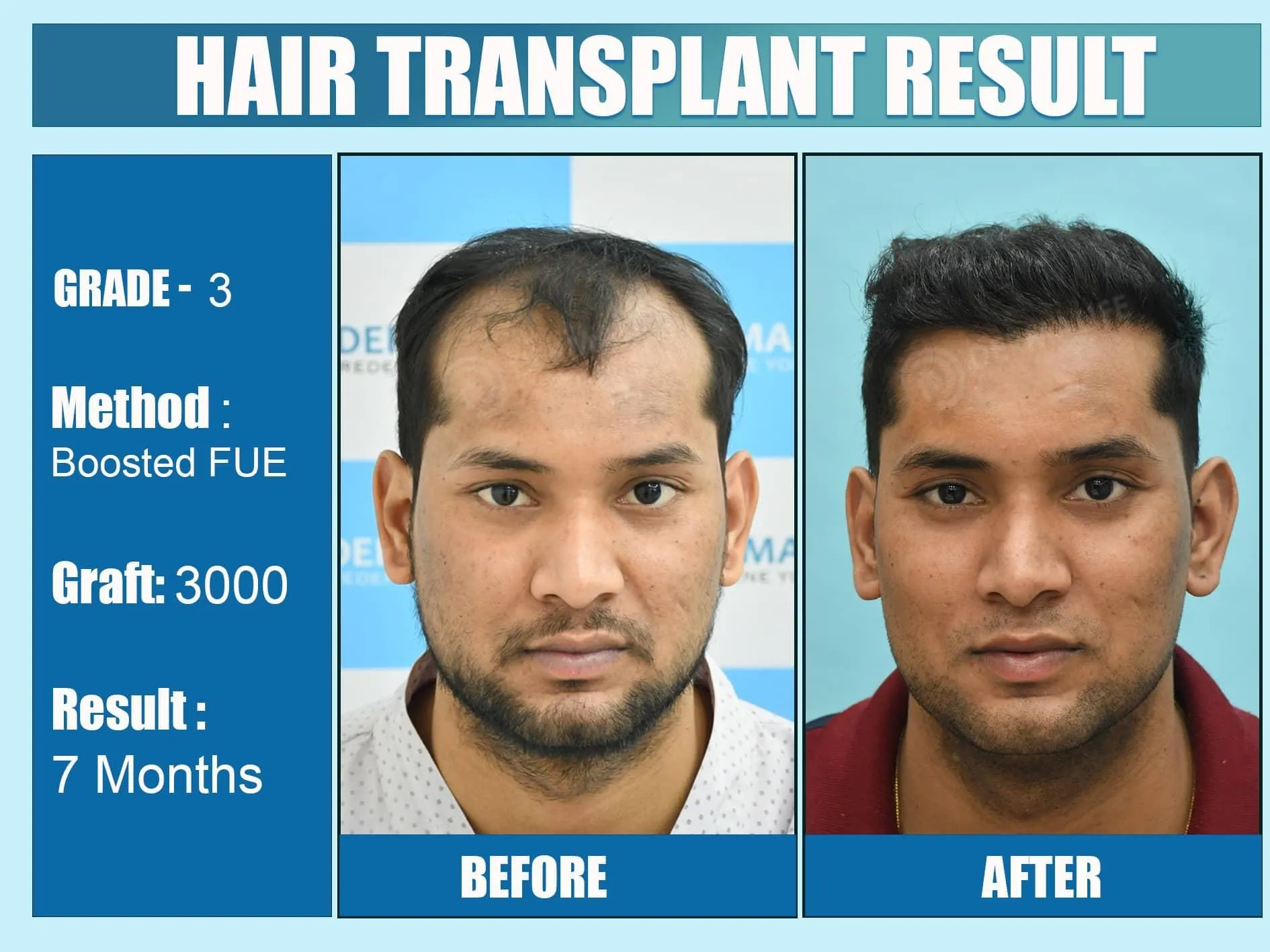
Reviewing unedited before-and-after portfolios of past patients allows you to assess a surgeon’s artistic style and attention to natural detail.
5. Direct Doctor Involvement in Surgical Steps
In high-quality clinical practices, the lead surgeon remains directly involved throughout the entire procedure.
During your consultation, confirm that your surgeon will personally handle:
-
Microscopic scalp diagnosis and candidate selection.
-
Direct donor graft extraction and quality oversight.
-
Designing and creating all recipient site incisions (which dictates hairline angle, depth, and direction).
-
Directing post-operative care and follow-up evaluations.
Conclusion
Choosing a top hair transplant surgeon requires looking past marketing slogans and focusing on verified medical degrees, fellowship credentials, years of experience, academic standing, and direct surgical involvement.
Entrusting your hair restoration to an accredited, globally recognized specialist like Dr. Gaurav Garg at Dermalife Hair and Skin Clinic in Delhi ensures your procedure is performed safely, delivering dense, natural growth that stands up to a lifetime of close inspection.