Wisdom tooth are the last permanent teeth to develop, usually appearing during the late teenage years or early adulthood. While some people experience no problems when these teeth emerge, others develop pain, swelling, or difficulty cleaning the back of their mouths.
Limited jaw space, unusual tooth positioning, and partial eruption can create complications that may require professional attention.
Knowing when wisdom tooth removal becomes necessary, how the procedure works, and what recovery involves can help patients make informed decisions about their oral health.
What Are Wisdom Teeth and Why Do They Cause Problems?
Wisdom teeth, also called third molars, are located at the very back of the upper and lower jaws. Most adults develop up to four, although some have fewer or none.
When sufficient space is available, wisdom teeth may emerge normally and function like other molars.
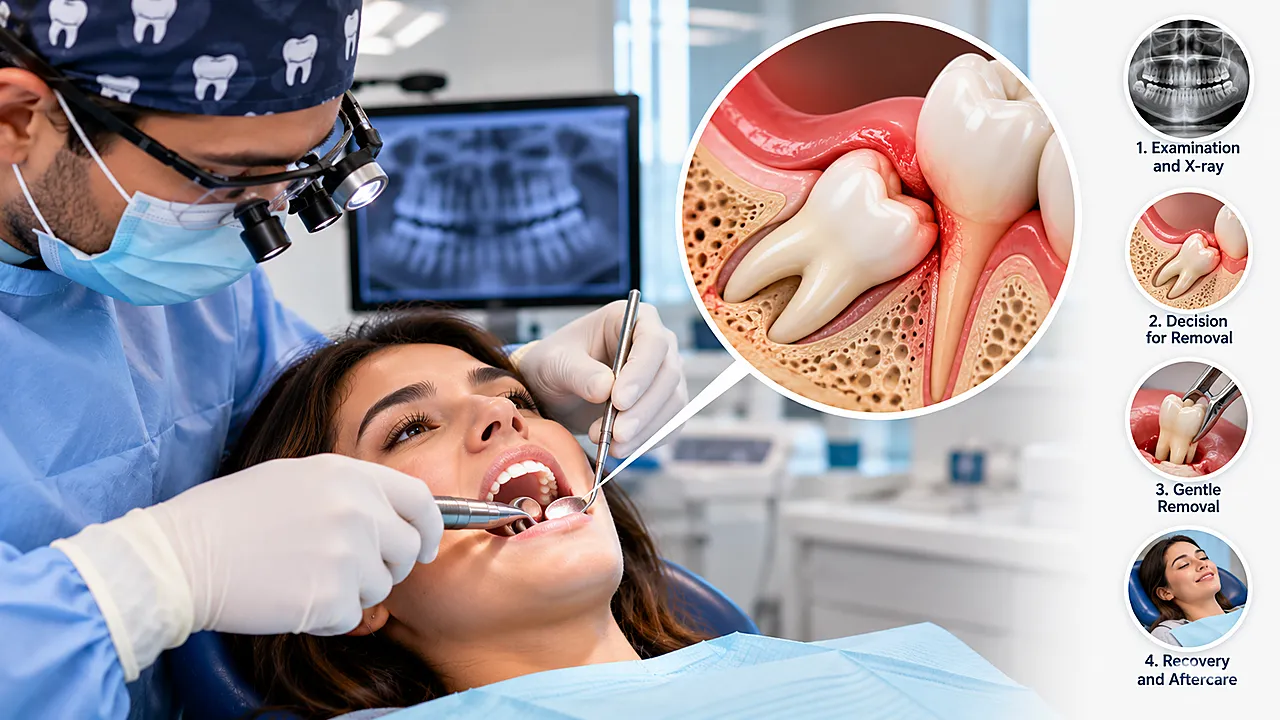
However, inadequate space can prevent proper eruption. A wisdom tooth may remain trapped beneath the gums, emerge at an angle, or push against neighboring teeth.
These conditions can make cleaning difficult and increase the risk of inflammation, decay, and infection.
What Are the Signs That Wisdom Tooth Removal May Be Necessary?

Not every wisdom tooth needs extraction. Dentists usually recommend treatment after evaluating symptoms, tooth positioning, and surrounding oral structures.
Common warning signs include:
- Persistent pain near the back molars
- Swollen, tender, or bleeding gums
- Difficulty opening the mouth comfortably
- Repeated infections around partially erupted teeth
- Food becoming trapped around wisdom teeth
- Tooth decay affecting the wisdom tooth or adjacent molar
Some problems develop without noticeable symptoms. Dental examinations and appropriate imaging help identify these concerns.
What Are Impacted Wisdom Teeth?
Impacted wisdom teeth are third molars that cannot emerge normally because another tooth, bone, or gum tissue blocks their path.
Different types of impaction can occur.
Soft Tissue Impaction
The tooth has partially emerged but remains covered by gum tissue. This can create spaces where bacteria and food particles accumulate.
Partial Bony Impaction
Part of the wisdom tooth remains trapped within the jawbone, preventing complete eruption.
Complete Bony Impaction
The tooth remains entirely enclosed within the jawbone and may require a more complex surgical approach if extraction is indicated.
The type and position of impaction influence treatment decisions.
How Is Wisdom Tooth Removal Performed?
The wisdom teeth extraction process generally begins with a dental examination and diagnostic imaging to evaluate the tooth’s position and nearby structures.
Local anesthesia is commonly administered to numb the treatment area. Additional sedation options may be considered depending on the procedure and patient needs.
For a fully erupted tooth, extraction may be relatively straightforward.
When a tooth is impacted, the dentist or oral surgeon may need to make a small incision in the gum and remove a limited amount of surrounding bone. Sometimes the tooth is divided into smaller sections for removal.
After extraction, the area is cleaned, and stitches may be placed when necessary.
What Should You Expect During Recovery?

Recovery depends on the complexity of the extraction, number of teeth removed, and individual healing response.
Temporary swelling, mild bleeding, jaw stiffness, and discomfort are common during the initial healing period.
Patients are generally advised to:
- Rest after the procedure.
- Eat soft foods during early recovery.
- Avoid smoking and drinking through straws.
- Follow prescribed medication instructions.
- Maintain gentle oral hygiene.
- Avoid disturbing the extraction site.
Following professional aftercare guidance helps protect the healing tissues and reduce complications.
What Are the Risks of Delaying Necessary Extraction?
Leaving a problematic wisdom tooth untreated may contribute to recurring gum infections, cavities, or damage to adjacent teeth.
In some situations, cysts can develop around impacted teeth, although this is less common.
However, healthy and properly positioned wisdom teeth do not automatically require removal.
The decision should be based on individual clinical findings rather than age alone.
Frequently Asked Questions About Wisdom Teeth Removal
1. Does everyone need their wisdom teeth removed?
No. Wisdom teeth that emerge normally, remain healthy, and can be cleaned effectively may not require extraction.
2. Is wisdom tooth removal painful?
Local anesthesia helps control pain during the procedure. Temporary discomfort and swelling may occur afterward.
3. How long does recovery take?
Initial recovery commonly takes several days, although complete tissue healing takes longer and varies between patients.
4. Can impacted wisdom teeth cause infection?
Yes. Partially erupted wisdom teeth can trap bacteria beneath surrounding gum tissue, potentially causing inflammation or infection.
5. Can all four wisdom teeth be removed together?
Sometimes. The decision depends on tooth positioning, surgical complexity, medical history, and the dentist’s assessment.
Final Thoughts
Wisdom teeth do not always cause dental problems, but impacted or poorly positioned third molars can affect oral health.
Recognizing possible symptoms, understanding extraction procedures, and following recovery instructions can help patients manage treatment more confidently.
Regular dental assessments remain important for monitoring wisdom teeth and determining whether removal is clinically necessary.
Read More: How Do You Choose the Right Dentist in Verdun for Your Dental Needs