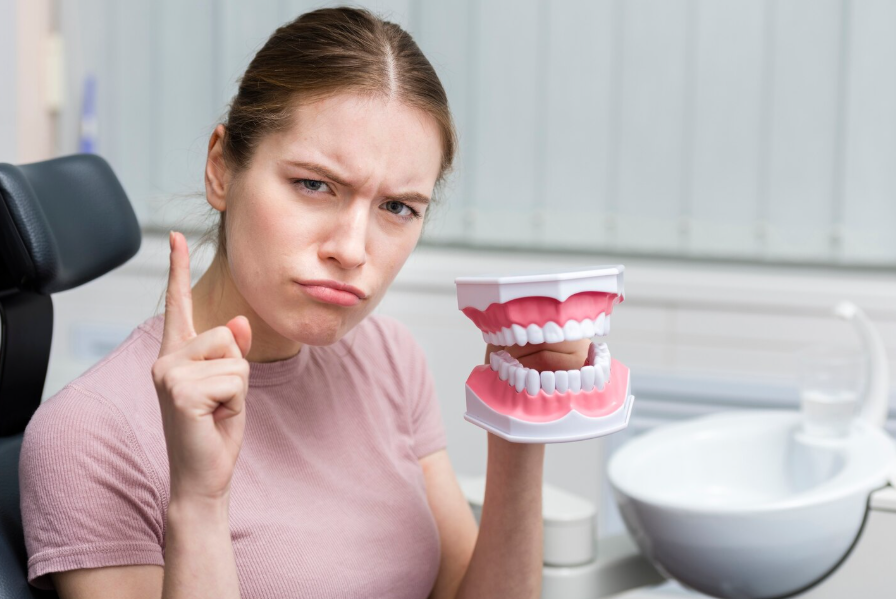
Ever catch a photo of yourself smiling and think your teeth look… longer than you remember? Not new teeth. Same ones. Just more of them showing above the gumline than there used to be. That’s gum recession. It’s more common than most people think. Past 40 especially, but not only there, plenty of twenty-somethings deal with it too, usually the ones who brush like they’re trying to scrub a pan clean.
It moves slow. Sneaky, almost. Nobody notices until a friend says something, or a hygienist points at a spot mid-cleaning and goes, “see that right there?”
So What’s Actually Going On Under There?
Healthy gums wrap snug around every tooth. They cover the root, quietly, and you never think twice about it. Recession is just that tissue pulling back. A sliver at a time. Enough of it, and the root shows. Sometimes it’s a noticeably different shade than the enamel sitting above.
Nobody wakes up with gum recession overnight. It builds. Months of it, sometimes years, small pullback stacking up until one day you finally see it without squinting.
Signs Worth Watching For
● Teeth that look longer than they used to, especially in photos with flash
● A visible line where root meets enamel, often a shade darker
● Sensitivity to cold drinks, or cold air, that wasn’t there a year ago
● A small notch near the gumline you can feel with your tongue before you can actually see it
So Why Does It Happen?
Most people do at least one of these for years. No idea, until it shows.
Brushing too hard tops the list. Feels productive. Feels like you’re really getting in there. But it wears gum tissue down, slow, and almost nobody notices until a hygienist points out the wear pattern during a cleaning.
Gum disease is right behind it. Bacteria along the gumline breaks tissue down. Bone too, eventually, if it’s left alone long enough.
Genetics plays a role too. Most people never think about that one. Some folks are just born with thinner gum tissue, a “thin biotype” is the term dentists use for it, and it recedes faster no matter how gentle the brushing is. Grinding at night adds pressure the same way it wears enamel down. Misaligned or crooked teeth can pull tissue thin in specific spots. And tobacco is tobacco. Smoking, chewing, both linked to faster recession, study after study.
Can Receded Gums Grow Back?
No. Not on their own, anyway.
This is the part that catches people off guard. Most soft tissue in the body heals itself, given enough time. Gums don’t work that way. Once the tissue pulls back, it stays back, unless a dentist actually steps in.
There’s a real upside here though. Caught early, it’s manageable. Often stoppable before it gets any worse. Reversed without treatment? That part just doesn’t happen.
What Actually Helps From Here
Start with the brush itself. Soft bristles, always. Let them do the work instead of your arm. Small circular motions beat the aggressive back-and-forth scrub most people default to, especially right along the gumline, where the damage tends to pile up.
A few habits worth locking in alongside that:
● Floss daily. Trapped plaque along the gumline is one of the bigger accelerants
● Grinding at night? Get a night guard. It protects gums as much as enamel
● Quit tobacco if it’s part of your routine. This one change tends to matter more than people expect
● Keep up with regular cleanings. That’s usually where gum disease gets caught before it spreads
None of this undoes damage that’s already there. Nothing does, not without treatment. But it slows the progression. For a lot of people, that’s the difference between mild recession staying mild and eventually needing something more involved.
When Does It Turn Into an Actual Treatment?
For cases further along, there’s more a dentist can do than just hand out brushing advice. Scaling and root planing usually comes first. A deep clean that clears bacteria and smooths root surfaces, so gums have a better shot at reattaching where possible.
Gum grafting comes after that, for the more advanced cases. Tissue gets added back over exposed roots. Helps with the sensitivity and how things look, both.
Neither one is a starting point though. They’re what comes into play once prevention alone has already stopped being enough.
When It’s Time to Get It Checked
Longer-looking teeth. Sensitivity that came out of nowhere. Roots you can suddenly see near the gumline. Any of that is your cue to get it looked at instead of waiting it out.
A dentist can tell you exactly where things stand, whether it’s still manageable or heading toward something that needs more. If you’re in the area and overdue for a checkup anyway, a dental clinic in Richmond Hill like Red House Dental can take an actual look instead of leaving you guessing in a bathroom mirror.
One Last Thing
Gum recession isn’t something you fix after the fact. It’s something you catch early, or you don’t. That’s really the whole story here.
So the next time your teeth look a little longer in a photo, don’t just scroll past it. Look closer. Book the checkup. Your gums aren’t going to fix themselves, but caught in time, they don’t have to get any worse either.