Cycle tracking used to look like this.
A thermometer by the bed.
A notebook with half-filled charts.
A lot of second-guessing.
Then came apps. Then reminders. Then colour-coded predictions that felt reassuring until real life didn’t follow the algorithm.
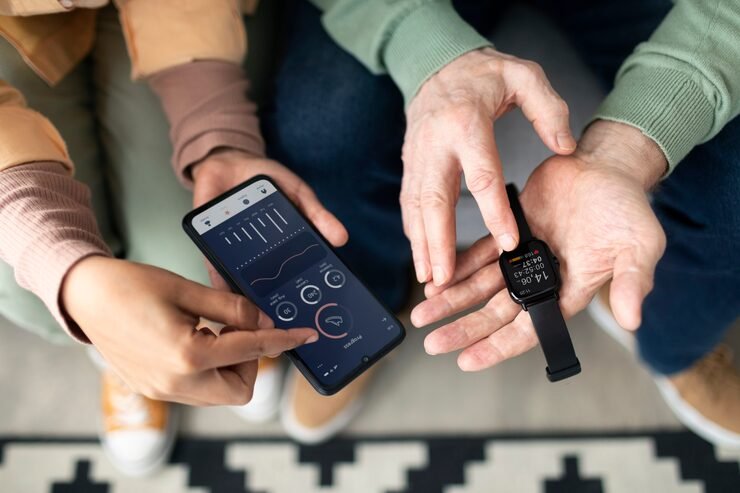
Now, wearables have entered the fertility conversation. Smart rings. Watches. Continuous data. Quiet tracking that doesn’t ask you to perform every morning.
Devices like the Oura Ring promise something many women going through IVF desperately want, insight without obsession.
But is this just another layer of data, or is wearable tech actually changing how we understand cycles during fertility treatment?
The answer lives somewhere between excitement and restraint.
Why Old-School Cycle Tracking Fell Short
Basal body temperature tracking has always been one of the most reliable ways to confirm ovulation. But it came with friction.
You had to wake up at the same time.
Before moving.
Before stress.
Before coffee.
Miss one day and the chart lost meaning.
For women undergoing IVF or hormone stimulation, this method became even harder. Sleep disruption. Anxiety. Injections. Appointments. The body wasn’t in its natural rhythm, so the data felt noisy and unreliable.
Wearables didn’t replace the biology. They removed the burden of capturing it.
What Wearables Actually Measure, and Why It Matters
Smart rings and watches don’t just track temperature. They track patterns.
Night-time skin temperature trends.
Heart rate variability.
Resting heart rate.
Sleep depth and disruption.
Stress response signals.
Instead of one fragile data point each morning, wearables collect thousands of points passively.
For IVF patients, this matters.
Hormonal stimulation often alters temperature, sleep, and stress long before scans show changes. Wearables help women see how their body is responding, not just what the protocol says should be happening.
At a fertility hospital, clinicians increasingly see patients who arrive better informed about their baseline patterns, especially stress and sleep, which play a larger role in hormonal response than many realise.
The Stress Signal IVF Patients Can’t Ignore
One of the most under-discussed aspects of IVF is stress physiology.
Not emotional stress. Biological stress.
Elevated cortisol disrupts sleep.
Poor sleep alters hormone signaling.
Disrupted signaling affects cycle response.
Wearables like the Oura Ring quietly reveal this chain reaction.
Women often notice:
● Elevated night-time heart rate during stimulation
● Reduced deep sleep before scans
● Temperature fluctuations tied to anxiety, not ovulation
This data doesn’t replace blood tests or ultrasounds. But it adds context.
Instead of asking “Why is my body not responding?”, women start asking “What is my body experiencing?”
That shift matters.
Why Wearables Are Especially Useful During IVF
IVF cycles are tightly controlled, but bodies aren’t machines.
Two women on the same protocol can respond completely differently. Wearables help highlight those differences early.
For example:
● A sudden drop in HRV may signal over-stimulation or poor recovery
● Persistent sleep fragmentation may precede hormonal imbalance
● Temperature trends can reflect luteal phase support adequacy
This information doesn’t guide medical decisions directly. But it informs conversations.
At the best fertility hospital in chennai, the most effective consultations happen when patients understand their own rhythms, not just their reports.
Where Wearables Can Mislead
Here’s the part tech-wellness culture often skips.
More data does not always mean more peace.
Some women become hyper-vigilant. Checking scores. Interpreting every dip as danger. Turning recovery metrics into another fertility performance review.
Wearables are tools, not verdicts.
They work best when used to observe trends over time, not react to daily fluctuations. IVF already demands enough monitoring. The goal of wearables is to reduce anxiety, not amplify it.
If the data starts to control mood instead of inform awareness, it’s time to step back.
Do Wearables Replace Medical Monitoring? No
This needs to be said clearly.
Smart rings and watches do not replace:
● Ultrasound monitoring
● Hormonal blood work
● Clinical decision-making
They are not diagnostic devices.
What they do offer is continuity. Clinics see snapshots. Wearables see the full week. The nights between injections. The stress between appointments.
That continuity helps women feel less disconnected from their bodies during highly medicalised cycles.
Why Tech-Wellness and Fertility Are Finally Aligning
For years, fertility care lagged behind consumer health tech. Women were expected to trust protocols without understanding their own data.
That’s changing.
Wearables bring fertility tracking into everyday life, without making it louder or more invasive. They allow women to stay present with their bodies instead of waiting passively for results.
This matters especially for women navigating IVF while working, parenting, or managing demanding careers.
The body doesn’t pause life during fertility treatment. Wearables adapt to that reality.
The Real Value Isn’t Prediction, It’s Awareness
Wearables don’t predict pregnancy.
They don’t guarantee ovulation.
They don’t ensure implantation.
What they do offer is feedback.
How well am I recovering?
How stressed is my nervous system?
Is my body coping with this cycle?
Those questions are just as important as follicle counts.
The Bottom Line for Women Considering Wearable Tech
If you’re drawn to tech-wellness, wearables can be a powerful companion during IVF, not because they replace medicine, but because they humanise it.
They turn invisible processes into understandable patterns.
They validate what your body is feeling before words catch up.
They offer insight without demanding effort.
Used thoughtfully, wearables help women feel with their bodies again, not monitored by them.
And in a fertility journey that can feel overwhelming and impersonal, that sense of connection is not a luxury.
It’s grounding.
Old-school cycle tracking asked women to prove their bodies were working.
Wearable tech simply listens.
And sometimes, being listened to is exactly what the body needs.